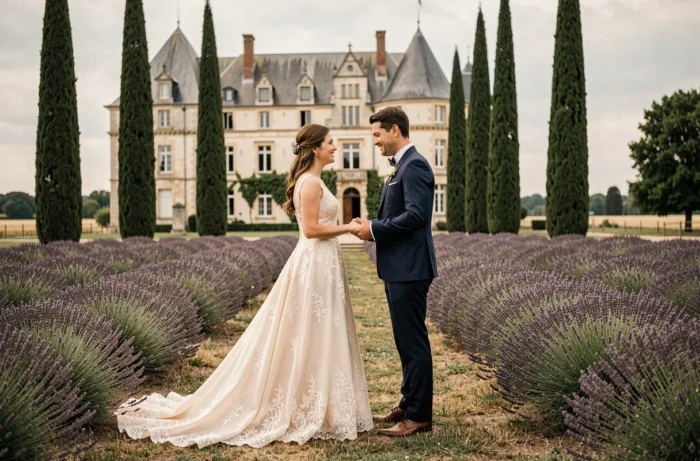
Organizing a wedding in France involves financial and logistical trade-offs that vary depending on the season, the number of guests, and the chosen format. The average cost remains in the five figures, but the discrepancies between expense categories are rarely detailed precisely. This article measures these discrepancies and identifies the variables that weigh most heavily on the budget and the timeline of preparations.
Wedding budget breakdown: the categories that concentrate expenses
The budget for a wedding is distributed very unevenly among different categories. The venue and catering alone absorb the largest share of the overall budget, far ahead of decoration or stationery.
| Expense category | Estimated budget share | Negotiation margin |
|---|---|---|
| Venue | High | Low in peak season, more flexible off-season |
| Catering | High (often the first category) | Variable depending on the formula (seated, buffet, food trucks) |
| Photographer / videographer | Average | Very different packages depending on included services |
| Attire and rings | Average | Wide range of prices, purchase or rental |
| Decoration and flowers | Moderate | High, especially with DIY or seasonal flowers |
| Stationery and invitations | Low | High (digital options available) |
Catering deserves special attention. The cost per guest increases non-linearly: going from 80 to 120 guests does not simply represent a 50% increase in expenses, as some fixed costs (staff, logistics) are distributed differently. The number of guests remains the variable that most affects the total budget.
To cross-reference this data with the offers from listed providers, consulting the information on France Mariage allows for comparing several quotes for the same category.
Wedding in peak season or off-season: what the data reveals
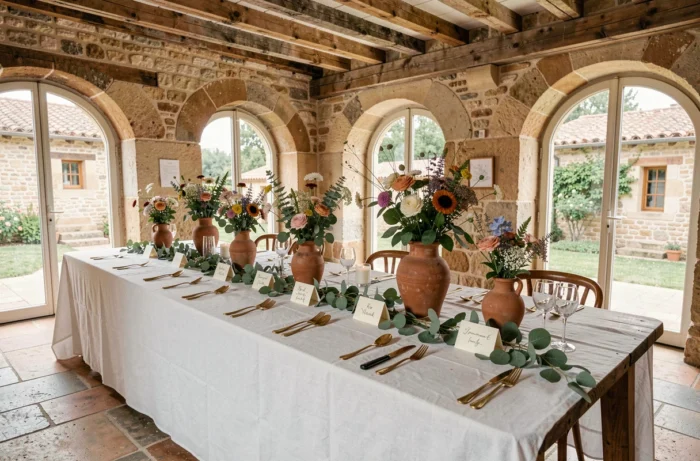
The majority of couples continue to target the May-September period. However, about 35% of weddings now take place off-season, a proportion that has increased since the end of the post-pandemic period. This shift concretely changes the conditions of organization.
Availability and pricing of venues
A popular venue in Île-de-France or Provence is often fully booked twelve months in advance for a Saturday in June or July. The same venue in November generally offers time slots with a shorter booking lead time.
Regarding pricing, the difference is not negligible. Several venues offer reduced rates in the off-season, sometimes with included services (accommodation, next-day brunch) to attract couples.
Specific constraints of off-season weddings
- Natural light decreases: outdoor photo sessions must be scheduled earlier in the day, which requires adjusting the ceremony schedule.
- A weather contingency plan becomes non-negotiable. A heated marquee or backup venue increases the logistical budget but protects against uncertainties.
- Some providers (florists, caterers) offer different seasonal products: squashes, citrus fruits, and dried flowers replace peonies and red fruits.
Choosing the off-season is not a default compromise. For couples who prioritize the availability of providers and budget flexibility, it is a rational trade-off.
Wedding format in France: the rise of the full weekend
A single-day wedding remains the norm, but the weekend format with next-day brunch is clearly on the rise. This format transforms the organization in several ways.
The Sunday morning brunch is no longer an informal add-on. It becomes a significant highlight in its own right, sometimes with a dedicated budget representing a substantial portion of the catering category. For a venue with on-site accommodation, this also means an additional night to book, which limits the choice of compatible venues.
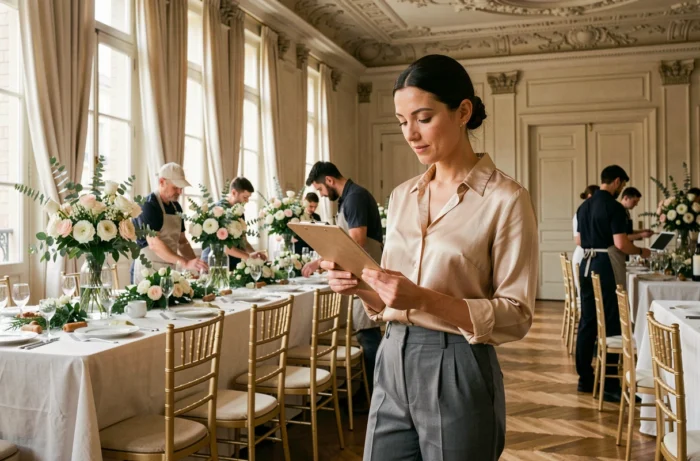
This format has a direct effect on the guest list. Not all guests stay on Sunday: therefore, two distinct capacities must be managed (Saturday evening and Sunday morning), with implications for catering and logistics.
Impact on the preparation timeline
A two-day wedding requires starting preparations earlier. The coordination between the venue, the caterer (who is involved in two services), and the accommodation for guests adds steps to the timeline. Starting the process twelve months in advance becomes a minimum for this format, compared to eight to ten months for a classic evening reception.
Wedding providers: the selection criteria that really matter
Competing guides list categories of providers (photographer, DJ, florist). The useful angle focuses more on the sorting criteria once the category is identified.
- The detailed quote line by line, not an opaque global package. A caterer who announces a price per person without specifying the number of servers, overtime, or the cost of additional wine leaves the door open to extra costs.
- The site visit with the provider before signing. A photographer discovering the lighting on the big day or a DJ who hasn’t checked the electrical setup are concrete risks.
- Verified reviews on specialized platforms, cross-referenced with direct recommendations. A provider with fifty positive reviews but no weddings in your area does not guarantee the same logistical quality.
- The cancellation or postponement clause in the contract. Since the pandemic, this is a point that many couples negotiate, but which remains absent from many standard contracts.
The choice of providers represents the most time-consuming phase of preparations. Focusing quote requests on three to four providers per category, rather than soliciting ten, speeds up decision-making without sacrificing comparison.
The budget distribution, the choice of season, and the wedding format form three interdependent levers. Adjusting one modifies the other two. A couple that makes early decisions on these three axes significantly reduces the stress of the following months of preparations and maintains a margin to absorb unforeseen events without exceeding the initial budget.