A check engine light coming on during the commute, a battery failing on the morning of a vacation departure, a flat tire discovered too late during a technical inspection: we all know these situations where regular maintenance could have avoided a hefty bill. The choice of vehicle itself affects the budget over several years, considering parts costs, fuel consumption, and resale value.
With the automotive expense increasingly weighing on the budgets of French households, every decision counts.
Manufacturer recalls and technical inspections: what is changing concretely
Since the decree of December 8, 2025, serious recall campaigns (notably those related to Takata airbags) can trigger an immediate vehicle stop. We’re no longer talking about a letter that gets postponed to the following week: hundreds of thousands of cars are potentially subject to a “stop drive” that prohibits driving until the repair is completed.
In practice, this means we must actively monitor notifications from the manufacturer. The simplest way is to check the VIN number on the manufacturer’s website or on platforms dedicated to recalls. Waiting for the technical inspection to discover an ongoing recall risks immobilization on the same day.
For those looking for car advice on Daily Auto, this recent regulatory constraint should be integrated into the maintenance routine just like oil changes or brake pad replacements.

Wear of common parts: knowing how to read the signs before a breakdown
We often wait for a noise to appear before taking action. The problem is that some parts do not provide audible warnings. A brake fluid level that gradually decreases makes no noise, but it reduces braking efficiency long before the pedal becomes soft.
Checks that take five minutes
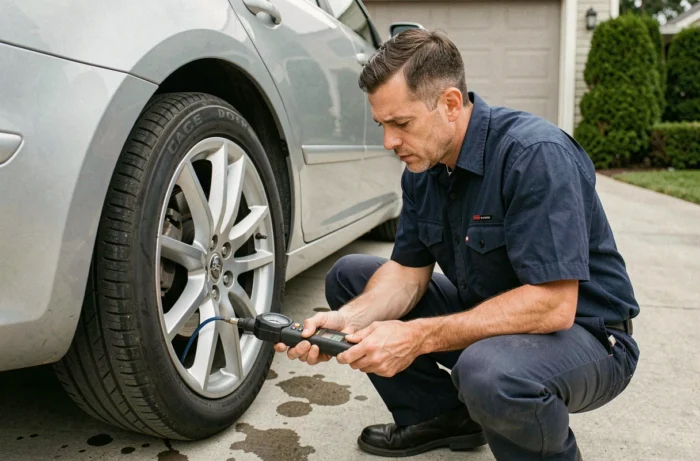
- Tire pressure when cold, at least once a month. Under-inflation accelerates wear on the sidewalls and measurably increases fuel consumption.
- Coolant level with the engine off. A level that drops between two oil changes may indicate a leak at the head gasket.
- Condition of the wiper blades. Streaks on the windshield in the rain mean a replacement is needed within the week, not the month.
- Lights: walk around the vehicle with the lights on. A burnt-out headlight goes unnoticed from the cabin and is a reason for a re-inspection.
Regular preventive maintenance always costs less than an emergency repair. On recent models, the digital maintenance booklet indicates the intervals recommended by the manufacturer. Adhering to them also protects the warranty.
Choosing a used car: the traps that weigh down the budget
The purchase price represents only a part of the actual cost. A vehicle priced attractively but with a high oil consumption engine or a traction battery (on a hybrid) nearing the end of its life can become a financial drain in just a few months.
What we forget to check before signing
Mileage alone is not enough. The maintenance history and tracking of manufacturer recalls provide more insight into the actual condition of the vehicle. A model with high mileage but a complete and up-to-date service record is often worth more than a low-mileage vehicle with no workshop history.
For electric and hybrid cars, the battery issue takes on a particular dimension. On certain models, a battery problem can lead to a complete replacement, with a cost that sometimes exceeds the vehicle’s residual value.
Feedback on this point varies by brand and battery generations, but caution dictates asking for a battery diagnostic before any purchase of an electric or hybrid used car.
Rising automotive budget: balancing maintenance and resale
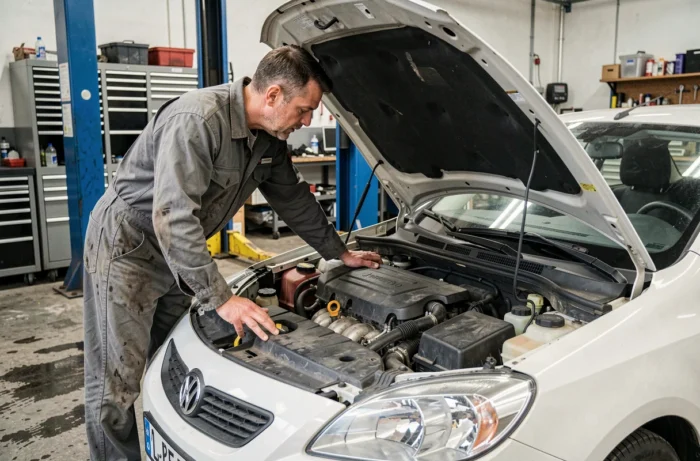
The car increasingly weighs on the expenses of the French, as highlighted by Franceinfo in September 2026. This budget pressure forces choices: invest in preventive maintenance to extend the lifespan of the current vehicle, or sell before costs exceed the value of the asset.
A well-maintained vehicle retains a better resale value. Used car buyers are increasingly checking the history through online platforms. A complete service record, dated parts invoices, and a recent technical inspection without a re-inspection can increase the price by several hundred euros compared to an equivalent vehicle without documentation.
What really reduces depreciation
The condition of the interior is as important as the mechanics in the buyer’s perception. Stained seats, a worn steering wheel, or a scratched dashboard give an impression of overall neglect, even if the engine runs perfectly.
Conversely, protecting the interior from the moment of purchase (seat covers, model-specific mats) and regularly cleaning plastic surfaces significantly slows visual aging. These are simple gestures that cost almost nothing compared to their effect on resale.
- Perform a complete interior cleaning at the change of season, focusing on vents and door seals.
- Treat the bodywork with a protective wax at least twice a year to limit oxidation.
- Keep all maintenance and repair invoices in a single, physical or digital file.
The insurance aspect also deserves an annual review. For electric vehicles, premiums are starting to rise due to the high cost of repairs in case of a claim, especially on the battery. Comparing offers each year remains the most direct way to contain this expense.
Regular maintenance, diligent tracking of recalls, and choosing a vehicle suited to one’s actual daily needs form a coherent whole. These are habits that develop gradually, and their cumulative effect on the budget can be measured over several years.