Comparing the great wines of the Loire often comes down to contrasting styles, grape varieties, or terroirs. The question today is different: are these wines undergoing changes due to climate change, and if so, which Loire appellations are absorbing this change without renouncing their identity? Recent data from the 2026 harvest and tastings of the 2025 vintage allow us to concretely measure these evolutions in the Loire vineyard.
2026 Harvest in the Loire: Unprecedented Signals on Early Ripeness and Volumes
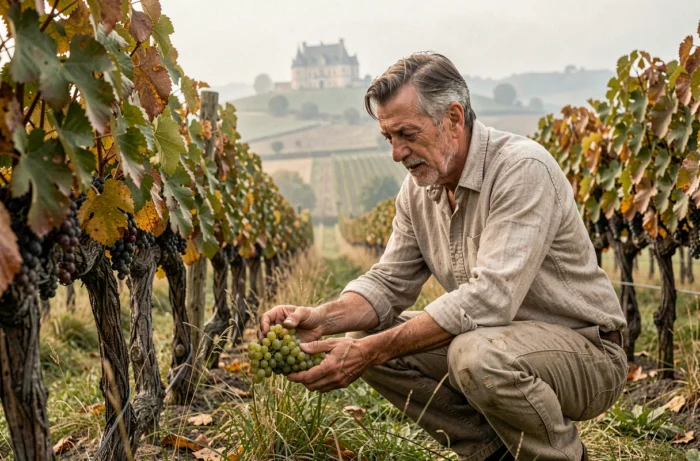
France is facing one of its lowest harvests in decades in 2026. The Loire vineyards are not exempt from this trend, with harvests accelerating from downstream to upstream along the river. This advancement in the calendar reflects a cumulative heat that is occurring more rapidly than before.
This phenomenon is not trivial. The acceleration of the harvest alters the ripening window of the grapes, which directly impacts the sugar-acidity balance of the finished wines. For Chenin Blanc in Vouvray or Cabernet Franc in Chinon, this compression of the growing cycle presents a technical challenge that each estate manages differently.
Historic houses like the one documented on philippebredif.fr illustrate how Touraine is coping with these new constraints, relying on ancient know-how and troglodytic cellars that provide stable storage conditions despite hotter summers.
Chenin Blanc, Sauvignon, Cabernet Franc: Comparative Adaptation by Grape Variety and Appellation
Not all Loire grape varieties react the same way to rising temperatures. The table below summarizes the dynamics observed in the three major grape varieties of the Loire, based on feedback from recent vintages.
| Grape Variety | Main Appellations | Observed Climate Effect | Adaptation Lever |
|---|---|---|---|
| Chenin Blanc | Vouvray, Savennières, Montlouis | Earlier ripening, reduced acidity in some vintages | Early harvest, selective picking on cool soils |
| Sauvignon Blanc | Sancerre, Pouilly-Fumé, Touraine | Aromas evolving towards ripe fruit, less sharp profiles | Work at relative altitude, winemaking on lees |
| Cabernet Franc | Chinon, Bourgueil, Saumur-Champigny | Softer tannins, increased alcohol content | Fractionated harvests, blends with shaded plots |
Chenin Blanc remains the grape variety that best absorbs climate variations due to its natural versatility between dry, semi-dry, and sweet. A winemaker can adjust the final style by playing with the harvest date and the level of residual sugars, which offers a flexibility that Sauvignon does not possess.
In contrast, Sauvignon Blanc from Sancerre and Pouilly-Fumé shows signs of stylistic tension. The very bright and mineral profiles that have built the reputation of these appellations are becoming harder to achieve in warm vintages. Some estates are beginning to harvest earlier to preserve aromatic freshness.
Cabernet Franc from Chinon and Bourgueil paradoxically benefits from warming: the tannins gain roundness and difficult vintages are becoming rarer. The risk, in the long term, would be to produce reds that are too concentrated, losing the drinkability characteristic of Loire reds.
Loire Appellations Facing Warming: Who is Changing the Fastest
The capacity to adapt does not solely depend on the grape variety. Soil, exposure, and viticultural practices play a decisive role. In this regard, not all appellations in the Loire Valley start with the same advantages.
- Savennières, with its schists and south-facing slopes, produces age-worthy Chenin whose tannic structure compensates for the decrease in acidity linked to hot summers.
- Saumur-Champigny benefits from its tuffeau soils, which restore freshness to the root system even during prolonged droughts.
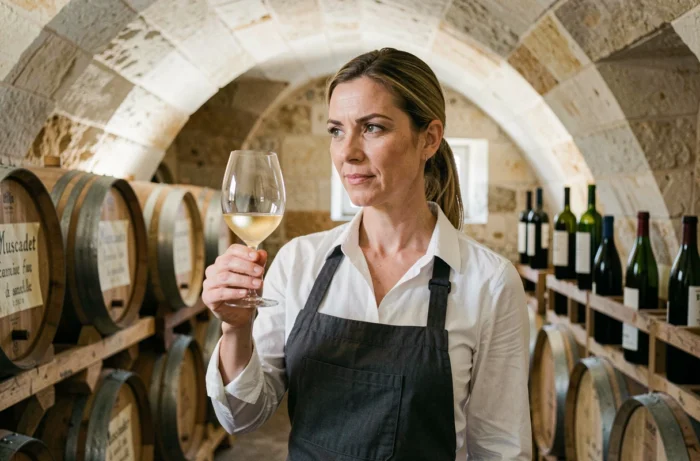
- Muscadet, in the Nantes area, explores communal crus that enhance granite terroirs capable of maintaining marked minerality despite rising temperatures.
- Sancerre and Pouilly-Fumé, on Kimmeridgian and limestone soils, remain effective but see their harvest window significantly reduced.
What distinguishes the estates that adapt without losing their identity is often the use of precision viticultural practices rather than changes in grape variety. Night harvesting, controlled cover cropping, and reduced yields on the most exposed plots: these technical adjustments allow for the preservation of the Loire style while dealing with the new climatic reality.
2025 Vintage Tasting: What Analytical Profiles Reveal
The tastings of the 2025 vintage for the Loire, documented by The Wine Doctor, provide a useful point of comparison. This vintage allows us to measure whether the ongoing adaptations yield results consistent with the historical identity of each appellation.
For the whites, the Chenin from Vouvray and Montlouis retains a readable acidic framework, even though ripe fruit is taking up more space in the aromatic profile than it did a decade ago. The Sauvignon from the Centre-Loire area shows a slightly shifted aromatic spectrum towards white-fleshed fruits, where citrus once dominated.
For the reds, the Cabernet Franc from Chinon and Bourgueil displays levels of phenolic maturity that regional winemakers previously only achieved in exceptional vintages. This qualitative consistency is a direct gain from warming, provided that the alcohol content remains controlled.
The overall French production in 2026 is estimated to be among the lowest in decades, which increases pressure on available volumes. For the Loire, the relative scarcity of volumes could accelerate the upgrading of certain appellations still perceived as accessible, particularly Bourgueil and Montlouis.
Identity of Loire Wines: A Vineyard That Mutates Without Renouncing Itself
The Loire vineyard is not passively undergoing climate change. Data from recent vintages show a measurable evolution of aromatic profiles and mouthfeel balances, without a sudden break from the characteristics that define the great appellations of the Loire.
The diversity of soils, exposures, and grape varieties over more than eight hundred kilometers of vineyards offers a structural resilience that few French wine regions possess. The true marker to watch in the coming years will be the ability of the appellations to maintain their freshness and drinkability, two traits that underpin the reputation of Loire wines among both enthusiasts and professionals.