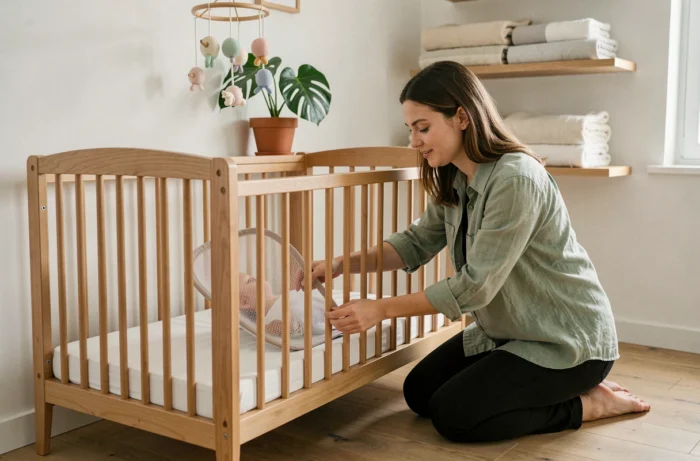
A parent arriving at a baby goods store in 2026 no longer faces the same aisle as two years ago. With a car seat standard that has rendered half of the existing stock obsolete and a European regulation changing labeling obligations on baby bottles, the landscape has shifted quickly. Brands are responding with ranges where the durability of materials and embedded technology are no longer marketing options but basic criteria.
R129 Standard and GPSR Regulation: What Changes in Store
Since September 1, 2024, only car seats compliant with the R129 (i-Size) standard can be sold new on the European market. The old ECE R44/04 approval has been withdrawn from sale. In practice, this means two things for families: rear-facing travel is mandatory until at least 15 months, and side crash tests are now integrated into the approval process.
R44 seats can still be found on the second-hand market. They remain usable, but their level of side protection has never been tested according to current criteria. For a first purchase, this question is no longer relevant.
The other text impacting the sector is the Regulation (EU) 2023/988 on General Product Safety, fully applicable since December 13, 2024. It concerns most baby products (bottles, pacifiers, bouncers, high chairs, strollers).
Manufacturers must ensure enhanced traceability, provide accessible technical documentation, and designate an identifiable point of contact within the European Union. Brands selling through marketplaces are particularly affected: a product without this information should no longer be listed.
To keep up with the latest on Baby Goods, we see that these regulatory changes are filtering through catalogs well before parents make their choices.
Sustainable Baby Goods: Beyond the Label, the Materials That Matter
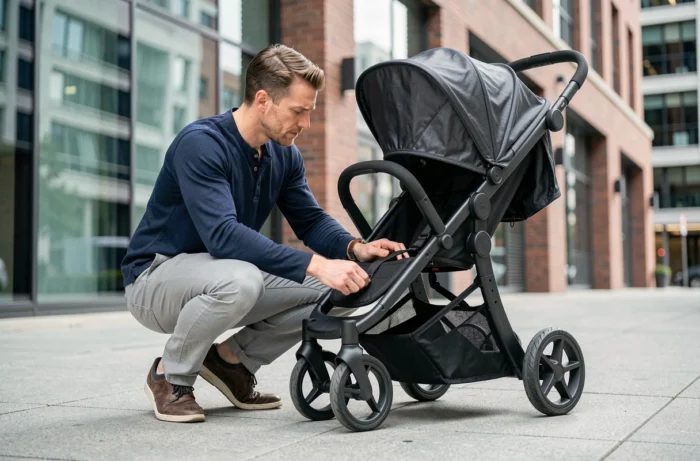
The term “eco-friendly” appears on half of the packaging. In practice, the difference is made on verifiable criteria. FSC certifications (wood from sustainably managed forests) and Oeko-Tex (textiles tested for harmful substances) remain the most reliable benchmarks for a quick purchase.
Several brands now offer ranges made from recycled polyester for bouncer covers and baby carriers. Organic cotton is becoming standard for textiles in direct contact with the skin. There is also a clear trend towards reducing packaging, with raw cardboard boxes replacing plastic blisters.
- Recycled polyester bouncer covers, sometimes combined with jersey and breathable mesh to manage heat
- Breastfeeding pillows filled with recycled microbeads, machine washable
- Next-generation washable diapers, with snap systems and modular inserts that simplify changing
A sustainable product in baby goods is recognized by its modularity: a bouncer that transitions from resting to play position, an evolving tricycle that accompanies the child for several years, a high chair with adjustable seating height. Fewer products purchased, used for longer.
Second Hand and Renting Among Parents
The second-hand market in baby goods is growing. Parents are reselling strollers, travel cribs, and baby carriers on specialized platforms. Caution is advised regarding car seats: a damaged or too old model (R44 standard) should not be put back into circulation, even at a reduced price. Feedback varies on this point, with some resellers not checking the product’s history.
Embedded Technology in Baby Goods: Connected Monitors and Scales
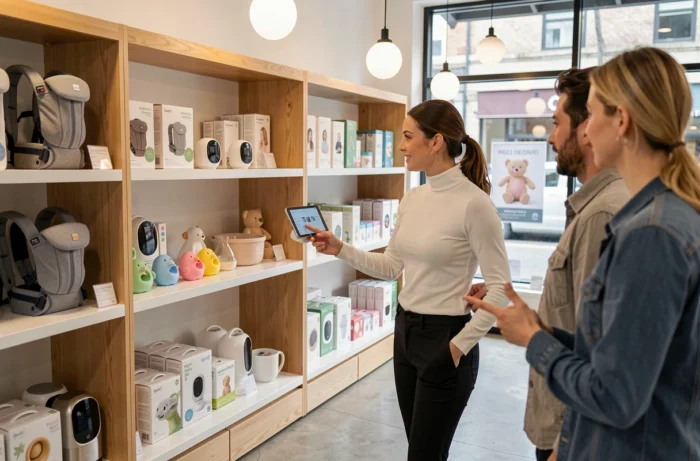
Traditional video baby monitors are giving way to smart sleep monitors. These devices track the infant’s heart rate and oxygen saturation, sending alerts to parents’ phones. The stated goal: reduce anxiety related to sudden infant death syndrome.
The textiles used in these wearable sensors (socks, headbands) are generally hypoallergenic. The long-lasting battery allows for a full night without recharging.
For growth tracking, connected baby scales record weight and transmit curves directly to an app. For parents of premature babies or those monitored for weight gain issues, this is a practical tool that avoids rough home weigh-ins.
What Technology Cannot Replace
A sleep monitor does not exempt from sleep recommendations (on the back, firm mattress, no blanket). Technology complements preventive measures; it does not replace them. Pediatricians emphasize this point at every consultation.
Car Seat Safety: Selection Criteria Under i-Size Standard
With the generalization of the R129 standard, the choice of a car seat is based on the child’s height rather than weight. This is a change in logic that many parents discover at the time of purchase.
- Check the height range indicated on the seat (in centimeters, not kilograms)
- Prefer Isofix installation, which limits installation errors compared to using just the seatbelt
- Check for the i-Size marking and the approval number on the product label
- When renting a car abroad, ensure that the provided seat is indeed R129 approved, as some rental companies are still selling old stock
Rear-facing until at least 15 months protects the neck and spine in the event of a frontal collision. Several manufacturers offer rotating seats that facilitate the child’s installation while maintaining this position.
The baby goods sector is advancing on two simultaneous fronts: stricter regulatory requirements and product innovations that meet specific needs. Parents buying today benefit from a level of safety and traceability that the previous generation did not have. The challenge remains to sort through the overwhelming offer to distinguish between gadgets and what truly changes daily life with a baby.