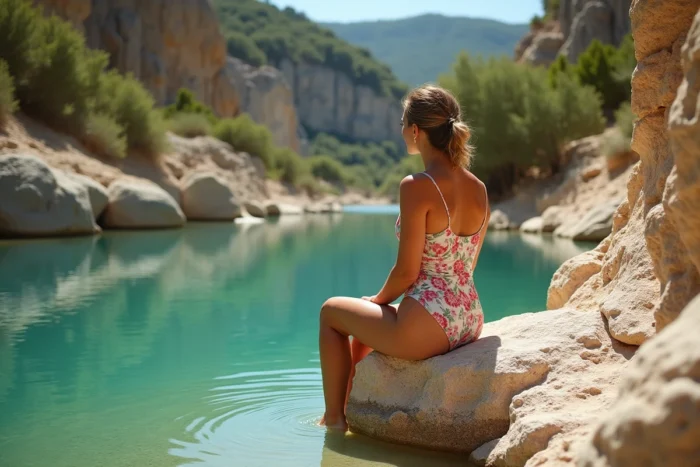
When temperatures rise above 35 °C in the Gard, finding an accessible water point from Nîmes becomes a concrete priority. Between monitored rivers, isolated pools, and developed bodies of water, the options are plentiful, but they are not all equal in terms of safety, access, and tranquility. We sift through the swimming spots around Nîmes that are worth the detour and those where the reality on the ground may surprise you.
Water quality and regulations: what distinguishes a reliable spot from a wild area
Before rushing to the nearest river, it’s worth taking the time to check a point that most guides overlook. The ARS Occitanie imposes a strict regulatory framework for all collective use swimming pools (campgrounds, leisure centers, hotels): declaration at the town hall at least two months before opening, health record, daily checks of the physicochemical and microbiological parameters of the water.
In a wild water body, none of these checks exist. The difference is significant for families with young children or sensitive individuals. Feedback on this point varies from year to year, as the bacteriological quality of a river fluctuates greatly after a rainy episode.
In practical terms, favoring a site with summer monitoring significantly reduces risks. The leisure centers in the Gard generally display analysis results on-site. For those looking for the best swimming spots in Nîmes while combining nature and safety, this is the first filter to apply.
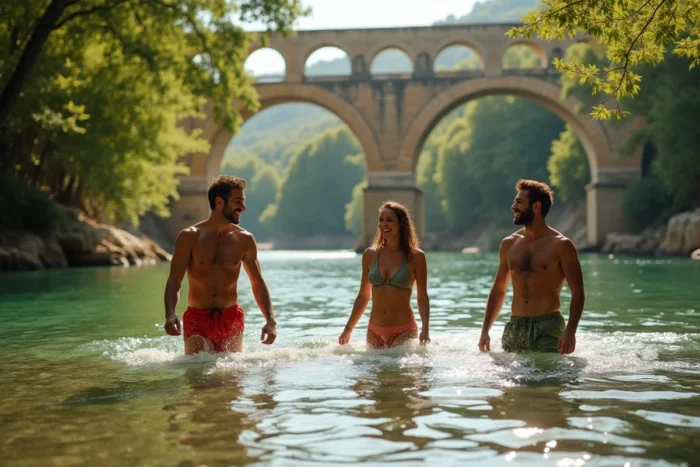
Swimming in the Gardon: choosing your section based on crowd levels
The Gardon remains the most accessible river from Nîmes. Most entry points can be reached in less than half an hour. The catch is that everyone knows this.
Collias and its pebble beaches
Collias attracts crowds starting in June. The main beach at the foot of the village offers easy access, a gradual bottom, and a spectacular setting between limestone cliffs. In return, on summer weekends, it can get crowded. To gain some tranquility, arriving before 9 AM or aiming for a weekday can radically change the experience.
The upstream area towards Sainte-Anastasie
Less known, the stretch between Russan and Sainte-Anastasie offers more discreet access. The trails require about a fifteen-minute walk from the parking area, which naturally filters the attendance. Here, you can find deep pools bordered by flat rocks, ideal for laying down a towel without immediate neighbors. The current can be stronger after rains: check the level before committing.
Gorges de la Cèze and Sautadet waterfalls: a demanding terrain
The Sautadet waterfalls, in La Roque-sur-Cèze, are featured on all swimming lists in the Gard. The site is spectacular, with its pots carved into the limestone and successive falls. It’s easy to understand the enthusiasm.
What is less often mentioned is that the Sautadet is an accident-prone site where swimming is prohibited in certain areas. Underwater currents in the giant pots can trap even an experienced swimmer. Signs indicate dangerous areas, but in summer, many ignore them.
To enjoy the Cèze without this level of risk, head upstream towards Montclus or Goudargues. The water is just as clear, the banks are flatter, and swimming is much more serene.
- Montclus: a small village with direct access to the river, less crowded on weekdays, with a regular pebble bottom.
- Goudargues: nicknamed the Gardese Venice, it offers calm swimming areas along the canal and the Cèze, with restaurants nearby.
- La Roque-sur-Cèze (excluding waterfalls): downstream from the main site, pebble beaches allow for swimming in less turbulent areas.
Developed water bodies in the Gard: an alternative for families
When traveling with young children or preferring a supervised setting, the lakes and leisure centers in the department provide a solid option. Unlike rivers, these sites have supervision, sanitary facilities, and often picnic areas.
The Camboux lake, in the Cévennes of Gard, combines monitored swimming in summer with water activities. The lake’s water is regularly checked, and the base offers pedal boat and canoe rentals. It’s about an hour from Nîmes, making it more of a day trip.
Closer by, the water body in the Eure valley or the leisure centers around Sommières allow for cooling off without much travel. The atmosphere is less wild than in the gorges, but the practicality/comfort ratio is unbeatable with young children.
Secret swimming spots around Nîmes: finding them without damaging them
We won’t create a GPS map of hidden spots, and that’s intentional. Preserved places remain so precisely because they are not listed on every travel blog.
Here are some concrete tips for discovering them:
- Explore the secondary tributaries of the Gardon (Alzon, Droude) using IGN maps rather than Google Maps. Marked hiking trails often lead to unmarked pools.
- Talk to the locals in the starting villages. In Mialet, Anduze, or Saint-Jean-du-Gard, you can get precise directions in exchange for a coffee at the local bar.
- Always respect the locations: no litter, no soap in the water, no music. A spot remains secret as long as it stays clean.
The recent trend towards stricter swimming rules in natural environments (some national parks now prohibit all swimming in their lakes to protect ecosystems) reminds us that access to these sites is not guaranteed. Preserving these spaces also ensures that we can return the following summer.
Between the Gardon, the Cèze, and the developed water bodies in the Gard, the choice of spot mainly depends on what you’re looking for: solitude or amenities, raw nature or a supervised setting. The only truly bad choice is to leave without checking the water level and any municipal prohibitions, which can be consulted at the town hall or on the Gard prefecture’s website.