
When you come across an empty bottle of jojoba oil just as you’re about to apply your serum, the question arises: what can you replace it with without compromising the effectiveness of your skincare? Jojoba oil owes its reputation to its composition, which is similar to human sebum, making it compatible with most skin types. Finding a natural alternative requires understanding what makes this oil so versatile, and then targeting suitable substitutes for your specific skin needs.
Fatty Acid Profile: The Criterion That Guides Overlook
The majority of articles listing vegetable oils merely mention their general properties (nourishing, moisturizing, repairing). They overlook a crucial parameter: the fatty acid profile of the chosen oil.
Jojoba is actually a liquid wax, primarily composed of waxy esters. It is this structure that gives it its lightness and ability to regulate sebum. No other common vegetable oil exactly replicates this composition.
To get close to it, we can think differently. Combination to oily skin should look for oils rich in linoleic acid, a fatty acid that does not leave an occlusive film.
Grapeseed oil, safflower oil, and sunflower oil (classic variety) meet this criterion. Specialized sources report that sunflower oil improves hydration and skin barrier function, making it a relevant substitute for sensitive or eczema-prone skin.
Before trying to replace jojoba oil, it’s wise to first identify your skin type and the function you expect from the oil in your routine.
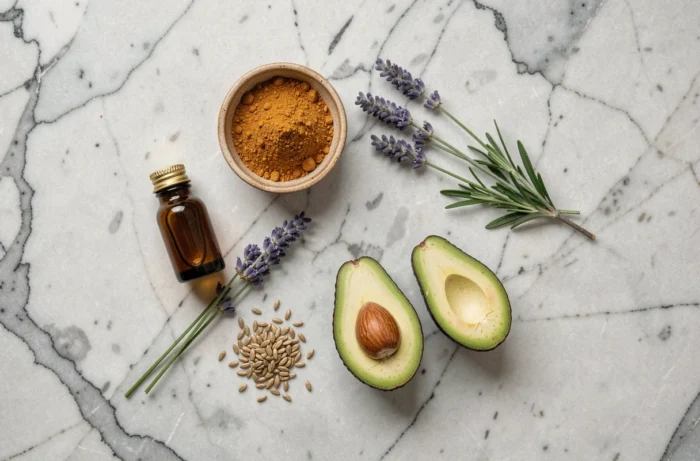
Plant Squalane: The Biomimetic Alternative to Jojoba
In recent years, plant-derived squalane (extracted from olives or sugarcane) has emerged as a leading substitute for reactive skin. Its main advantage: a high oxidative stability and remarkable tolerance, even in cases of rosacea or compromised skin barrier.
In practice, it can be found in oily serums, lightweight creams, or pure oil. Its fine, non-greasy texture resembles that of jojoba. It absorbs quickly and does not leave a sticky residue.
When to Prefer Squalane Over Jojoba
Squalane has the upper hand in two specific situations:
- Sensitive or redness-prone skin, where its lightness avoids any lipid overload and limits the risk of irritation.
- Warm or humid climates, where richer oils (argan, avocado) weigh down the skin and promote shine.
- Homemade serum formulations, as it mixes easily with other active ingredients without rancidity.
Feedback varies on this point, but it is observed that squalane is less suitable for very dry skin in winter, where a richer oil remains necessary.
Hazelnut Oil and Hemp Oil: Two Complementary Profiles for the Face
Among the concrete alternatives, two oils stand out for their ability to fulfill the role of jojoba in different contexts.
Hazelnut Oil for Combination Skin
Hazelnut oil has a pronounced dry touch. It absorbs quickly and regulates sebum production without clogging pores. It is used as a makeup base, in morning serums, or as a carrier oil to dilute heavier oils.
Its richness in oleic acid brings it closer to the lipid profile of jojoba, while offering an even lighter texture. It is suitable for acne-prone skin that does not tolerate dense oils well.
Hemp Oil for Reactive Skin
Hemp oil has a linoleic acid/alpha-linolenic acid ratio particularly suited for irritated or atopic skin. It soothes tightness and restores the lipid layer without causing comedones.
However, it rancidifies faster than jojoba. It should be stored in the refrigerator after opening and consumed within three months to avoid oxidation.
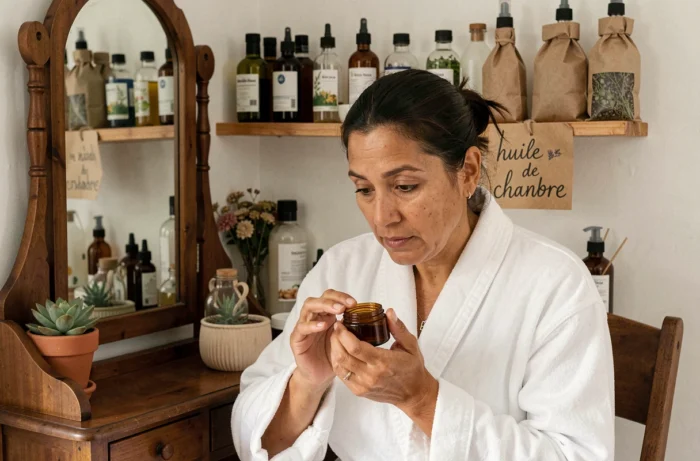
Choosing Your Alternative Based on Use: Face, Hair, or Body
Jojoba often serves as a versatile base, but each area of the body calls for a different substitute.
For facial care, plant squalane and hazelnut oil cover most needs (combination, sensitive, reactive skin). Mature or very dry skin should lean towards argan oil or rosehip oil, which are richer in vitamin E and unsaturated fatty acids.
For dry or brittle hair, avocado oil or coconut oil (as a pre-shampoo mask) provides deep nourishment. However, coconut oil remains comedogenic on the face, limiting its use to hair lengths and the body.
For the body, sweet almond oil retains its status as a safe bet. Its affordable price and gentleness make it a suitable choice for daily applications, especially after showering on still damp skin.
Quick Selection Criteria
- Oily or combination skin: hazelnut oil, grapeseed oil, plant squalane.
- Dry or mature skin: argan oil, rosehip oil, avocado oil.
- Sensitive or reactive skin: plant squalane, hemp oil, sunflower oil.
- Hair: avocado oil, coconut oil (as a mask), argan oil (for ends).
Choosing an alternative to jojoba is not trivial. Each vegetable oil meets a specific skin need, and the best approach is to test a pure oil for two to three weeks before permanently integrating it into your routine. The skin takes time to adapt, and what you observe in the first week does not always reflect the final result.