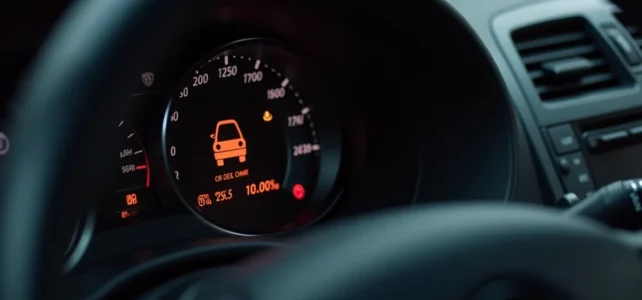
An orange engine light that appears within minutes after refueling points the diagnosis towards specific issues, quite different from a classic engine fault. The causal link with refueling indicates the vapor circuit, the fuel cap, or, in some diesels, the additive system of the particulate filter.
EVAP Circuit and P044x Codes: The Underestimated Lead After Refueling
The fuel vapor evaporation circuit (EVAP) is the first cause to explore when the light comes on specifically after refueling. This circuit, composed of the activated charcoal canister and the purge valve, manages the gasoline vapors that rise from the tank. During refueling, the pressure in the tank increases and heavily stresses this circuit.
A saturated canister or a purge valve stuck in the open position sends an excess of vapors into the intake manifold. The computer detects a mixture that is too rich and turns on the engine light, usually with EVAP fault codes between P0440 and P0457.
A simple test can clarify the situation before any costly intervention: only fill three-quarters of the tank during the next refueling. If the light does not reappear, the diagnosis clearly points to a canister at the end of its life or a purge valve that needs replacing.
On a vehicle older than five years, it is often the purge valve that fails first. To delve deeper into this point, the Ceze website to consult details the checks associated with refueling.
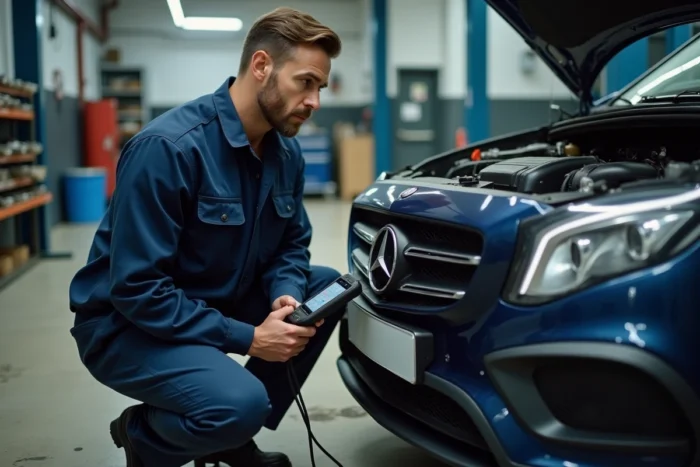
Engine Light After Diesel Refueling: The Cerine Trap on PSA Vehicles
On diesel vehicles from the PSA group (Peugeot, Citroën, DS), an engine light that comes on right after refueling often has nothing to do with the diesel itself. The FAP additive tank (cerine) is checked at the time of refueling: the computer takes advantage of the opening of the flap to check the additive level, and if it is low, it triggers the alert.
The timing creates frequent confusion. The driver thinks of a fuel problem or a pump error, while the fault existed before refueling. Cerine is used to lower the regeneration temperature of the particulate filter. Without it, regenerations fail, the FAP clogs, and the vehicle can switch to limp mode.
Distinguishing a Cerine Fault from a Fuel Fault
An OBD diagnosis removes the ambiguity in seconds. The codes related to FAP additization are specific (P24xx family on some PSA computers). In the absence of a scanner, two clues guide the diagnosis:
- The light comes on systematically after each refueling, even when changing gas stations, which rules out a fuel quality problem.
- The odometer shows a high mileage since the last cerine refill (varies by model, but the additive tank does not fill during regular oil changes).
- The “pollution control fault” message accompanies the engine light, without immediate power loss.
Fuel Cap and Sealing Fault: Check in Under Two Minutes
The fuel cap remains the simplest and most common cause. A poorly clipped cap or one with a cracked O-ring is enough to generate a fault code related to a vapor circuit leak. The computer interprets the drop in pressure as an EVAP anomaly.
The check takes less than two minutes: unscrew the cap, visually inspect the seal, and screw it back on until it clicks. If the light goes off after a few driving cycles (usually two to three starts), the problem was there. On vehicles equipped with a quarter-turn cap, replacing the cap is very inexpensive and permanently resolves the fault.

Fuel Error and Engine Sensors: When the Refueling is Truly the Cause
A partial fuel error (a few liters of gasoline in a diesel, or vice versa) quickly triggers the engine light after restarting. The computer detects aberrant combustion values via the lambda sensor (gasoline) or the rail pressure sensor (diesel).
Even without a pump error, poor quality fuel can temporarily trigger the light. The lambda sensors and exhaust gas temperature sensors react to combustion deviations. On recent gasoline engines, an octane rating lower than required by the engine disrupts ignition timing and generates misfires detected by the computer.
OBD Reading: Codes to Watch After Refueling
Using an OBD scanner remains the most reliable action to distinguish between all these causes. Here are the families of codes to monitor in this specific context:
- P0440 to P0457: EVAP circuit fault (canister, purge valve, cap).
- P0171 or P0172: lean or rich mixture, often related to an excess of vapors or unsuitable fuel.
- P0300 to P0312: misfires, which can result from degraded fuel or a partial pump error.
- P24xx (PSA): FAP additization fault, to be correlated with the timing post-refueling.
Clearing the codes after correction is not always sufficient. On most vehicles, the light turns off by itself after several driving cycles if the fault does not recur. A light that consistently returns after each refueling confirms a mechanical fault, not a one-time occurrence.
The most cost-effective reflex remains to start with the cap, then test a partial fill before engaging in a purge valve replacement or cerine refill. This elimination approach avoids unnecessary diagnostics and targets the real cause in two or three refuels.